Options Mall logo Men's Formal Trousers / Juhu
  1. Home
  2. Journal

The editorialroom.

Journal / Eight long reads

Guides and insights on men's formal trousers — written to help you choose, wear and keep them well. Each article stands alone; read them in order for a complete course.

  1. 01The essential formal trouser wardrobe
  2. 02How to choose the correct trouser fit
  3. 03Understanding the importance of trouser rise
  4. 04Formal trousers for modern professionals
  5. 05The role of fabric in trouser drape
  6. 06How to coordinate formal pants with shirts
  7. 07The importance of trouser length
  8. 08Common formal trouser styling mistakes
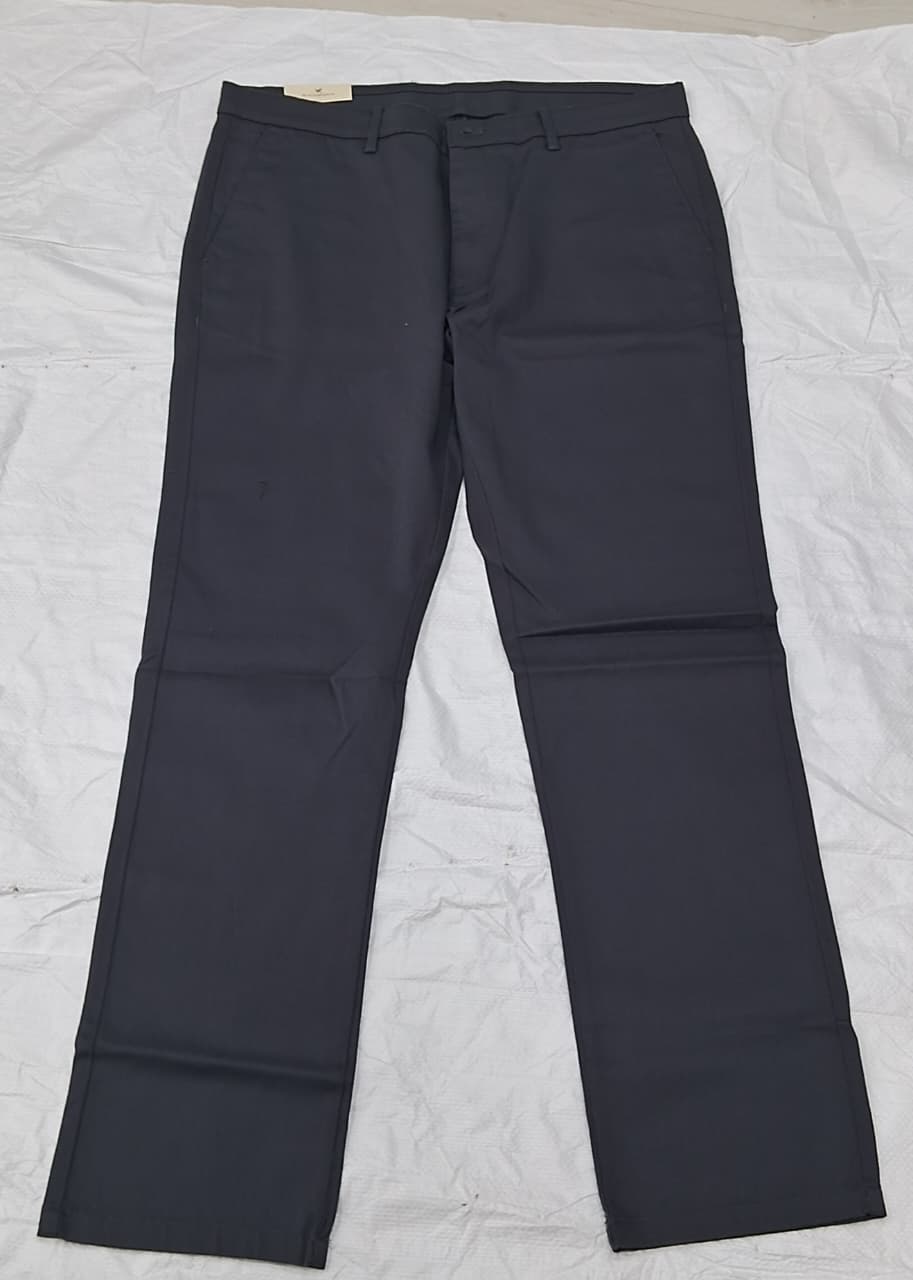
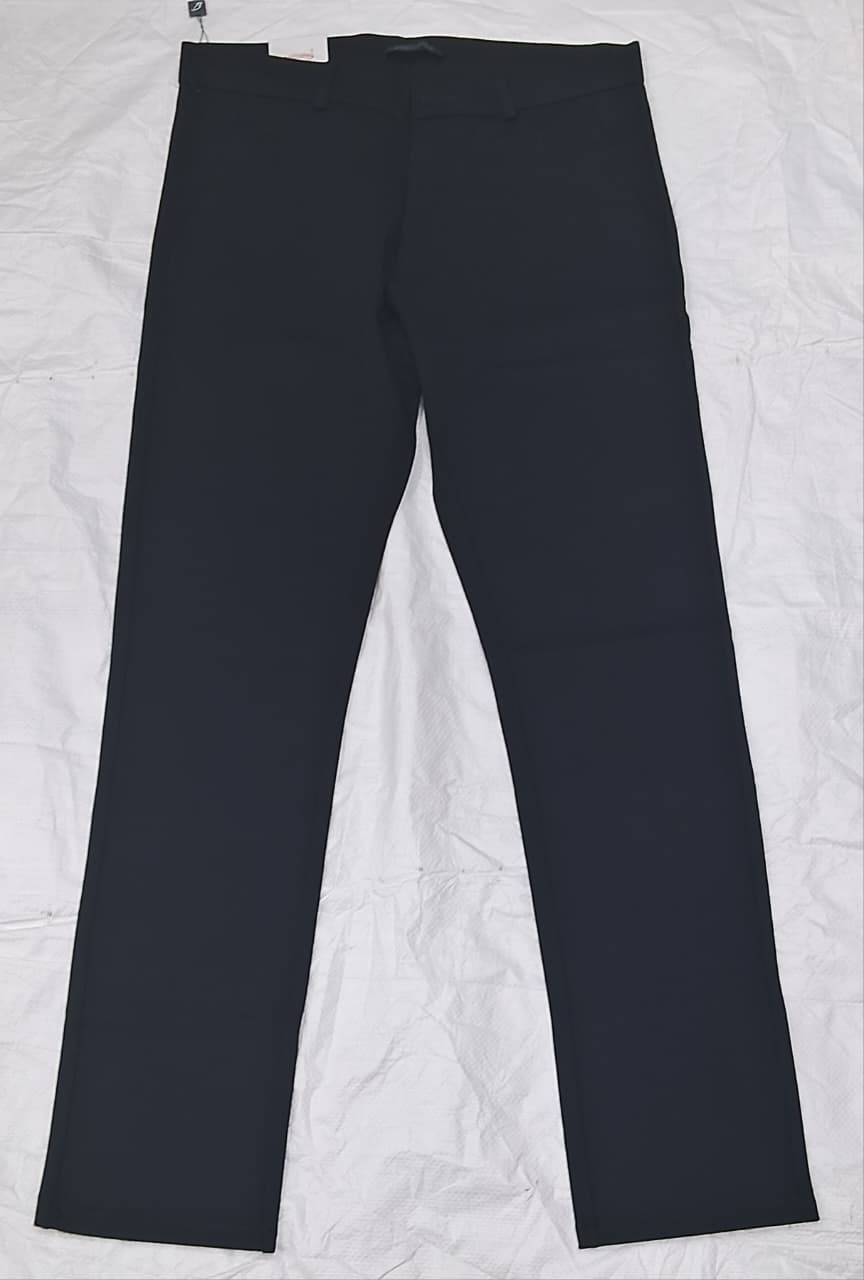
Navy-black formal trousers laid flat
J-01The first pair: dark and plain

Feature01 / Wardrobe

The essential formal trouser wardrobe

A formal wardrobe is not built by buying many trousers. It is built by buying the right few, in the right order.

Pair one: charcoal or navy, plain, classic fit

The first formal trouser should be the most versatile: a dark, plain, smooth cloth in a classic or straight fit with a flat front. Charcoal works with black and brown shoes and every shirt; navy is equally strong if you prefer brown leather. This pair will carry interviews, client meetings and formal evenings.

Pair two: the other dark neutral

Whichever of charcoal or navy you didn't buy first comes second. Together they cover most professional weeks and allow you to alternate days so each pair rests and recovers its shape.

Pair three: a lighter grey

Mid or light grey opens up combinations — above all the navy blazer and grey trouser, one of the most dependable pairings in menswear. Grey also lightens a summer wardrobe without becoming casual.

Pair four: a warm neutral

Beige, taupe or brown adds warmth for relaxed offices, travel and evening dinners. Choose this pair in a cloth that breathes well; it will often be worn in the heat.

Pair five: a texture or a different cut

With the colours covered, the fifth pair adds variety: a textured weave, a pleated front, or a tapered cut. This is the pair that makes the wardrobe feel personal.

Rule of thumb: buy for the life you lead most days, not for the rare occasion. If most days are spent at a desk, comfort and crease resistance matter as much as colour.
Guide02 / Fit

How to choose the correct trouser fit

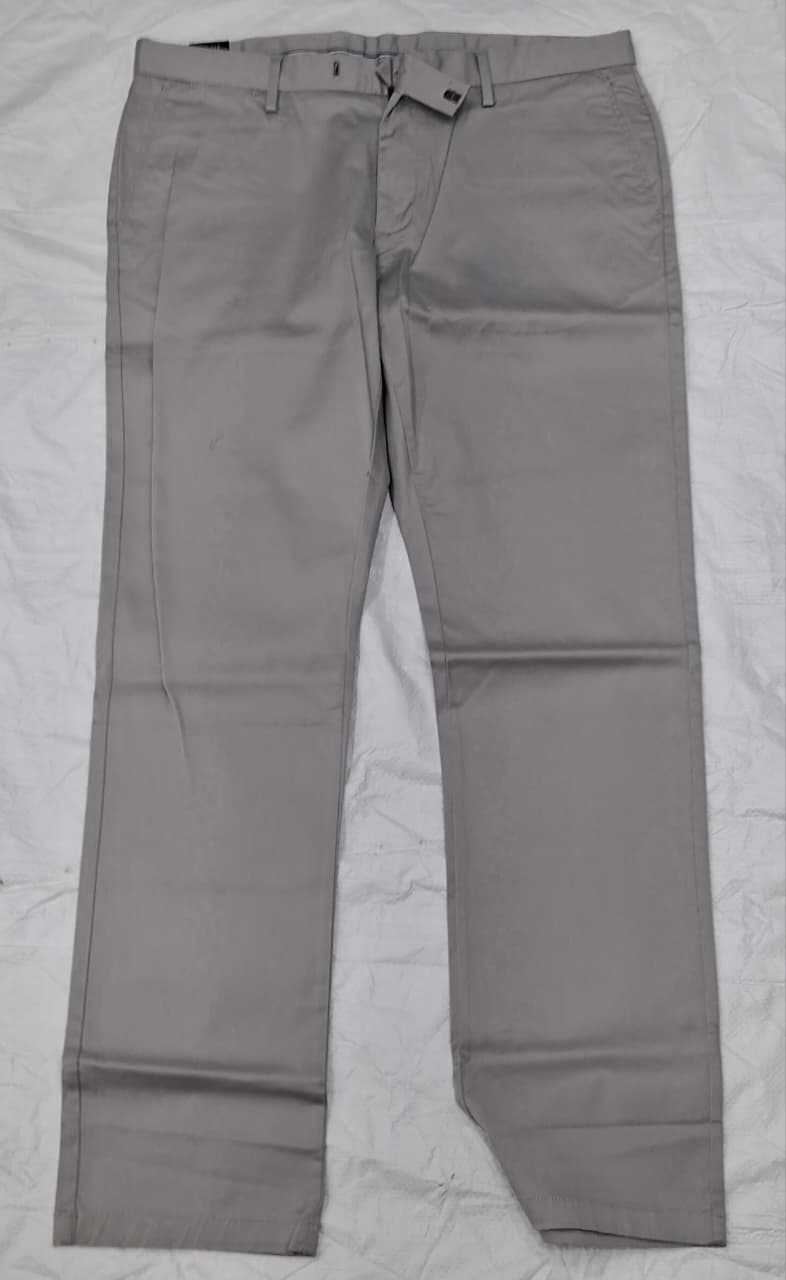
Light grey trousers laid flat
J-02Check the line, not the label

Sizes vary between makers, so the label is only a starting point. Use this fitting-room routine to judge any formal trouser in a few minutes.

  1. Wear the right shoes

    Try trousers with the shoes you'll actually wear, and a tucked shirt. Length and break can't be judged in socks.

  2. Fasten and sit

    Close the waist without a belt. Sit down: the waist shouldn't dig in, and the back shouldn't gape or expose your shirt.

  3. Check the seat

    Look in a mirror from behind. The cloth should fall smoothly with no horizontal pulling and no loose pouch.

  4. Move

    Squat slightly, take a long step, climb a stair if you can. The thigh and knee should allow it without strain.

  5. Read the crease

    Standing straight, the front crease should fall to the centre of your shoe. Twisting suggests a fit or pressing issue.

  6. Judge the hem

    Decide on the break you want. Remember that length and waist are routine alterations; seat and thigh are much harder to change.

The priority order: fit the seat and thigh first, then the waist, then the length. A trouser that fits the seat and thigh can almost always be adjusted elsewhere; the reverse is rarely true. For a detailed explanation of each point, see the fit lab.

Study03 / Rise

Understanding the importance of trouser rise

Rise is the measurement most men never check — and the one that most changes how a trouser feels and looks.

Rise is the distance from the crotch seam to the top of the waistband. Front rise is measured at the front, back rise at the back; the back is usually longer so the trouser follows the seat and stays covered when you sit.

What rise changes

Where the trouser sits. Low rises sit on the hips, mid rises near the natural waist, high rises at or above it. How long your legs look. A higher waistband visually lengthens the leg — useful for shorter men and with tucked shirts. Comfort. Too short a rise pulls at the crotch and digs in when seated; too long a rise leaves extra cloth hanging below.

Choosing yours

For formal trousers worn with tucked shirts, a mid rise is the dependable choice. Pleated trousers usually look best with a slightly higher rise, which lets the pleats fall cleanly. Lower rises suit slim, casual-leaning trousers and are less practical with tucked shirts and jackets.

A higher waistband visually lengthens the leg.

When trying trousers on, sit down. If the back of the waistband drops low enough to expose your shirt or underwear, the back rise is too short for you — regardless of the size on the label.

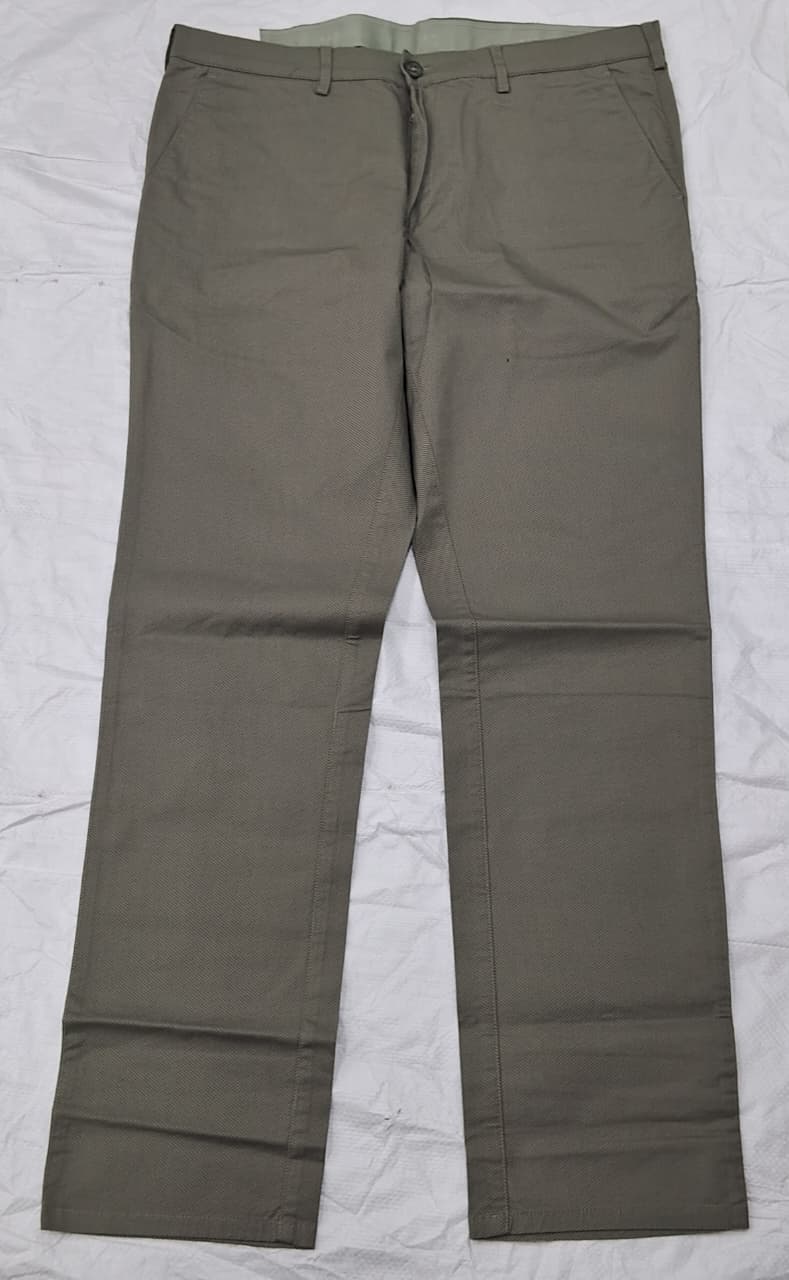
Taupe-olive trousers laid flat showing the waistband and fly
J-03Waistband to crotch seam = rise

Essay04 / Work

Formal trousers for modern professionals

Charcoal-navy trousers laid flat
J-04The everyday dark trouser

Professional dress has changed more in the last two decades than in the fifty years before. Suits are worn less often, offices range from formal to openly casual, and many professionals split the week between office, home and travel. Yet the formal trouser has not disappeared — it has become more important. It is the piece that keeps an outfit professional when the tie and jacket are gone.

The modern professional asks more of a trouser than earlier generations did. It must look sharp in a meeting, stay comfortable through hours of sitting, survive a commute and a flight, and transition to an evening dinner. That is why contemporary formal trousers increasingly combine classic details — a pressed crease, a clean waistband, jetted pockets — with comfort features like a little stretch, lighter cloths and more forgiving tapered cuts.

Adaptability is the key quality. A charcoal trouser with a white shirt and oxfords is boardroom-ready; with a fine knit polo and loafers it suits a relaxed office; with a dark shirt it works for an evening event. One well-chosen pair can play three roles.

In practical terms, a modern professional's trouser wardrobe usually rests on dark neutrals for formal days, lighter greys and warm neutrals for variety, and at least one pair in a crease-resistant, breathable fabric for travel and humid weather. Fit tends towards straight, slim-straight or tapered legs with a slight or no break — clean lines that look current without being extreme.

Above all, professionals today are judged on consistency. A trouser that is always pressed, always the right length and always appropriate to the room says more about reliability than any single statement piece.

Olive trousers laid flat
J-05Cloth decides the fall

Material05 / Drape

The role of fabric in trouser drape

Drape is how a fabric falls under its own weight. It is the difference between a trouser that hangs in a clean column and one that clings, bunches or balloons.

What controls drape?
Three things: fibre (wool and viscose tend to flow; cotton tends to hold shape), yarn and weave (fine, smooth worsteds drape more fluidly than coarse, open weaves), and weight (heavier cloth hangs straighter and resists static and wind).
Why does it matter for formal trousers?
Good drape keeps the front crease straight and the leg line unbroken as you walk. It also hides minor fit imperfections: a fluid cloth falls past a slightly full seat, where a stiff cloth would show it.
Is a heavier fabric always better?
No. In Mumbai's climate, lighter weights are often more comfortable. The aim is the best drape you can get at a weight you can comfortably wear — a fine, mid-weight blend often strikes the balance.
How can I judge drape in a shop?
Hold the trouser by the waistband and let it hang. Watch how quickly the leg settles and whether the crease falls straight. Then gather a handful of cloth and release it: fabrics that recover quickly will look neater through the day.

How-to06 / Shirts

How to coordinate formal pants with shirts

The shirt and trouser are the core of every formal outfit. Coordinating them well comes down to contrast, formality and fit.

  • Contrast in depth. Pair lighter shirts with darker trousers. White, light blue and pale pink work with almost every neutral trouser.
  • Avoid near-matches. A shirt very close to the trouser colour flattens the outfit; aim for clear difference.
  • Match formality. Smooth poplin and twill shirts with smooth formal trousers; oxford and textured shirts with textured or relaxed trousers.
  • One pattern at a time. A striped or checked shirt sits best over a plain trouser.
  • Tuck cleanly. Formal shirts should be fully tucked, with the button placket aligned to the trouser fly.
  • Mind the warmth. Cool trousers (navy, grey, charcoal) welcome cool shirts; warm trousers (beige, brown, olive) suit white, cream and soft blues.

For a full trouser-by-trouser table, use the colour matrix on the styling page.

Navy trousers laid flat
J-06Navy: white, blue or pink above
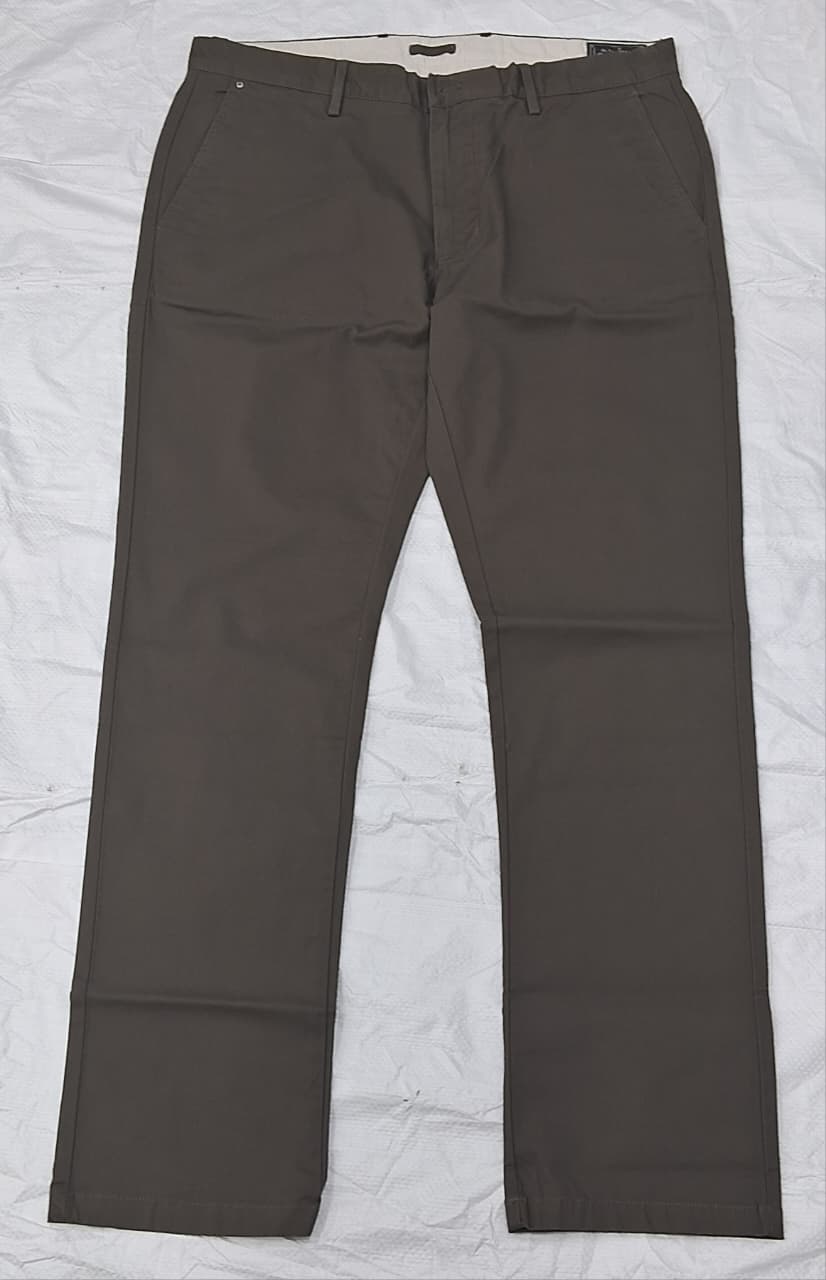
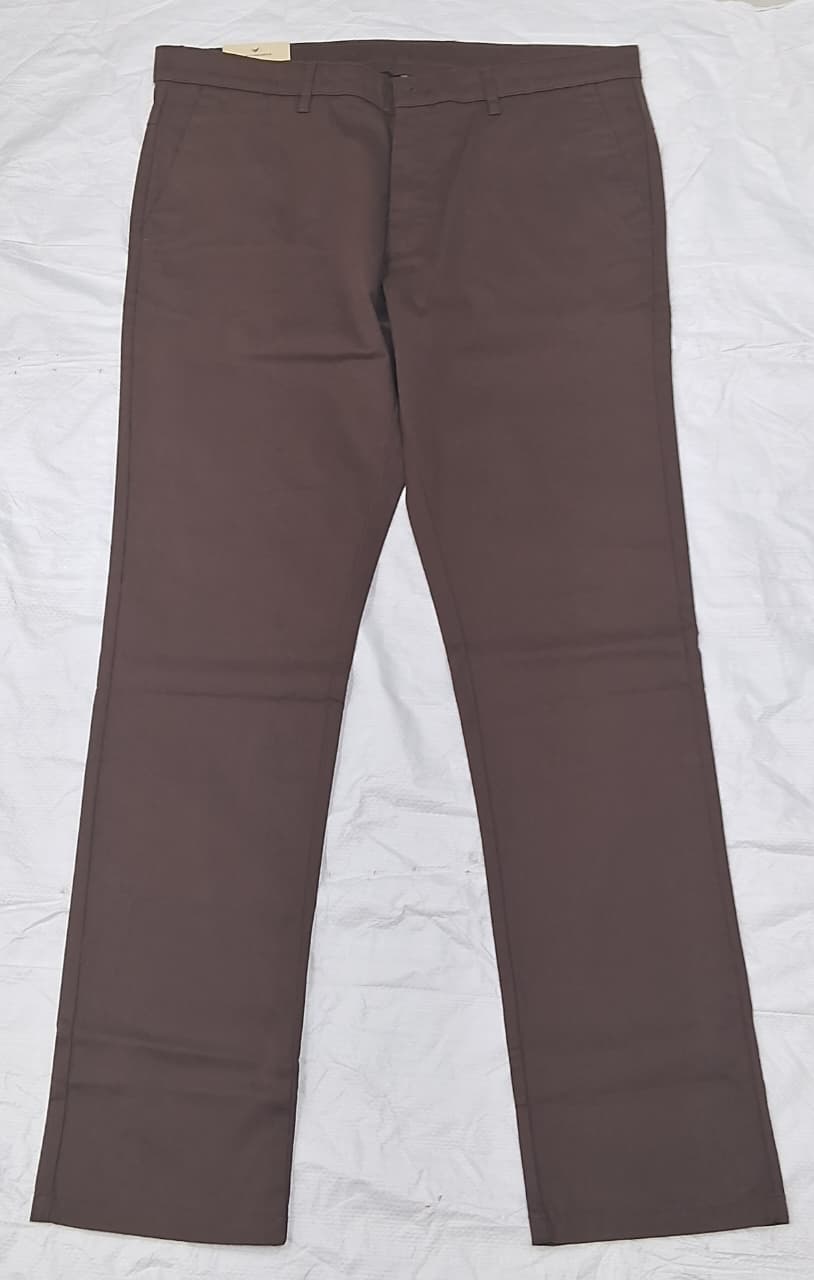
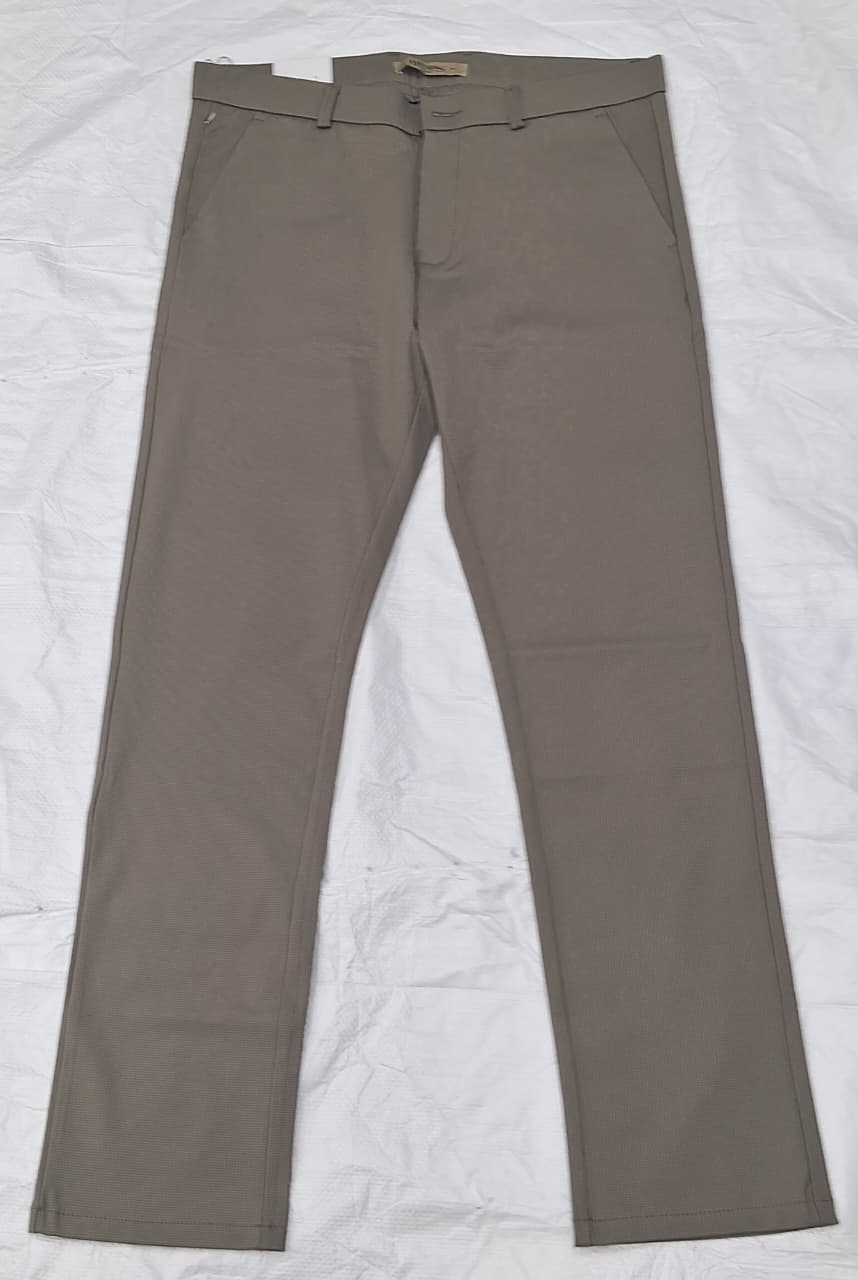
Olive-brown trousers laid flat, full length
J-07Full length, plain hem

Proportion07 / Length

The importance of trouser length

Length is the most visible fit decision — and the easiest to get right. A trouser that is the wrong length looks wrong however good the cloth.

Trousers that are too long collect in heavy folds over the shoe, making the leg look shorter and the outfit untidy. Trousers that are too short — unless deliberately cropped — expose the sock when you walk and read as outgrown.

The right length depends on three things: the leg width (narrow legs are worn shorter, wider legs longer), the shoe (sleek loafers suit less break than heavy brogues) and the setting (traditional formal settings tolerate more break; contemporary offices favour less).

Always check length standing naturally, in the shoes you'll wear. Keep the same length across your formal trousers so your shoes always look right, and have new trousers hemmed if needed — it is one of the simplest and most valuable alterations.

Checklist08 / Mistakes

Common formal trouser styling mistakes

Most formal outfits that look "off" fail for a handful of predictable reasons. Each is easy to fix.

✕ 01

Too much length

Fabric pooling over the shoe makes the leg look shorter and heavier.

FIX — Hem to a slight break in your usual shoes.

✕ 02

Belt and shoes that clash

A black belt with brown shoes splits the outfit in two.

FIX — Match leather colour and finish.

Mauve-brown trousers laid flat
✕ 03

Pockets that flare

Side pockets pulling open signal a hip that is too tight.

FIX — Size up at the hip or choose a regular or pleated cut.

✕ 04

A lost crease

A soft, faded crease makes a formal trouser look casual and tired.

FIX — Hang correctly and press regularly.

✕ 05

Overloaded pockets

Phone, wallet and keys distort the hip and seat line.

FIX — Carry essentials in a jacket or bag.

✕ 06

Jacket too close to the trouser

Almost-matching separates look like a mismatched suit.

FIX — Choose clear contrast in colour or texture.

✕ 07

Wrong socks

White athletic socks, or socks that flash bright against a dark trouser.

FIX — Match socks to the trouser, or to the shoe.

✕ 08

Fit borrowed from trends

A very skinny or very wide leg that doesn't suit your build or your office.

FIX — Choose the leg line that balances your proportions.

Next scene — 08About